(Updated October 2026. USD figures are converted at USD/JPY = 150 for reference)
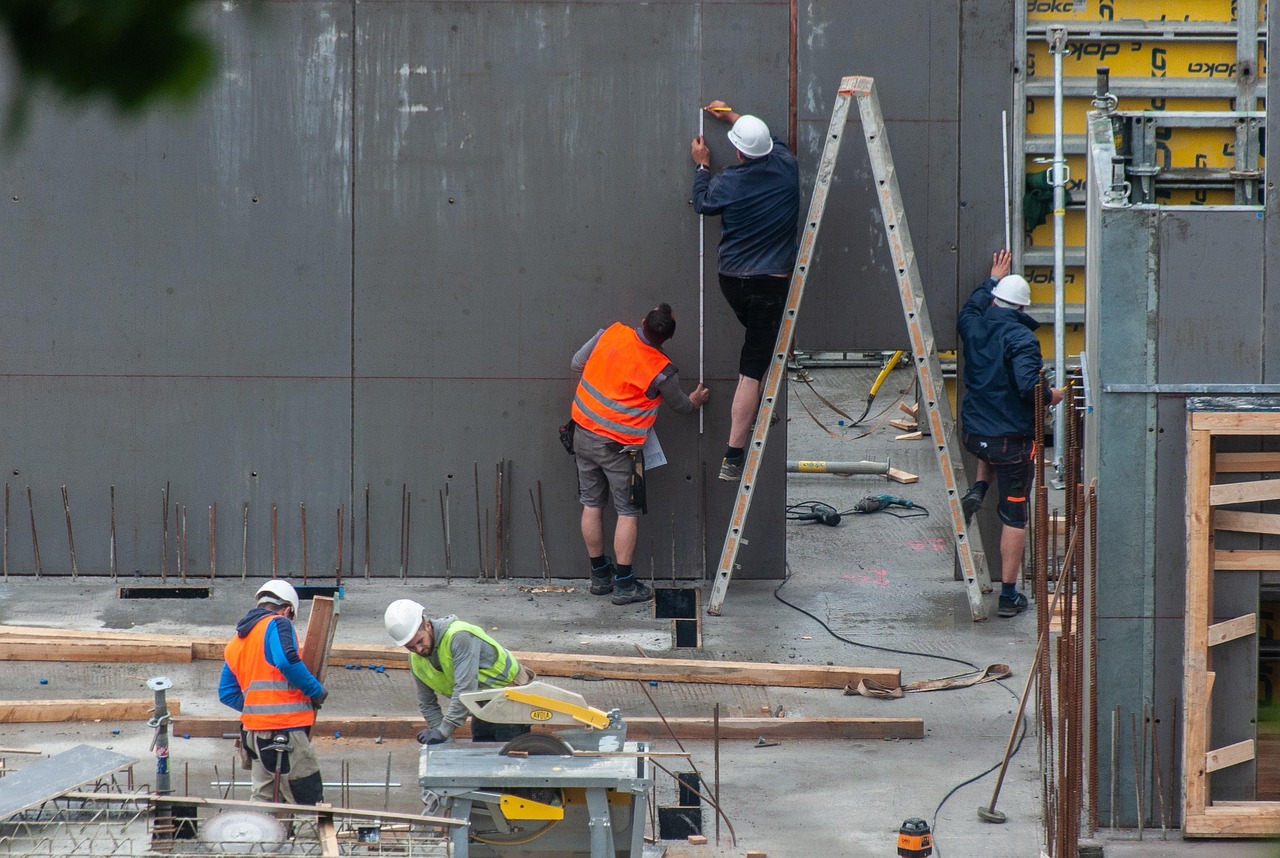
Japan’s mechanical, electrical and plumbing (MEP) contractors install and maintain the electrical, air-conditioning, plumbing and telecommunications systems of buildings and plants. Demand for their work is growing, led by private non-residential construction, while the supply of qualified engineers and technicians limits how much work each contractor can take on. Between 2025 and 2026, two Japanese manufacturing groups sold their MEP contractor subsidiaries to outside buyers: Sumitomo Electric Industries sold Sumitomo Densetsu to Daiwa House Industry, and Mitsubishi Electric sold Hokukoh Densha and Kohdensha to Kinden. In the disclosures of these and other recent transactions, acquirers repeatedly cite the securing of construction capacity and skilled personnel as a reason for the acquisition.
This article is written for corporate development and international business development teams at foreign companies that see Japan as an acquisition market, a source of partners, or a source of acquirers for their own businesses. It reviews Japan MEP contractor M&A through the market structure, the industry landscape, domestic consolidation, foreign capital in Japanese MEP and adjacent businesses, Japanese MEP contractors’ acquisitions abroad, the industry-specific factors acquirers examine, and the implications for overseas acquirers.
1. Market Structure — Private Construction Demand and Workforce Constraints
Market size
According to the Ministry of Land, Infrastructure, Transport and Tourism (MLIT), construction investment in Japan is forecast at ¥81.47tn (~USD 543bn) in FY2026, up 2.9% year on year. Government investment is forecast at ¥26.60tn (~USD 177bn, up 0.6%) and private investment at ¥54.87tn (~USD 366bn, up 4.1%). Non-residential building investment is forecast at ¥17.18tn (~USD 115bn, up 6.2%), of which private non-residential building is ¥12.32tn (~USD 82bn, up 8.6%), growing faster than construction investment as a whole. The same release estimates FY2025 construction investment at ¥79.18tn (~USD 528bn) (MLIT, FY2026 Construction Investment Outlook).
MLIT’s Survey on Construction Work Performance gives the size of the MEP segment. In FY2024 (April 2024 to March 2025), completed construction work by MEP contractors totaled ¥38.05tn (~USD 254bn, up 2.3%), about a quarter of the ¥154.5tn (~USD 1.03tn) for the construction industry as a whole. Its main components were electrical contractors at ¥11.96tn (~USD 80bn), plumbing and HVAC contractors at ¥10.32tn (~USD 69bn), telecommunications contractors at ¥3.51tn (~USD 23bn) and machinery installation contractors at ¥9.45tn (~USD 63bn) (MLIT, Survey on Construction Work Performance, FY2024 results; estimates based on each contractor’s principal trade).
Orders have risen. For the 131 members of the Japan Electrical Construction Association, electrical construction orders in FY2025 (April 2025 to March 2026) were ¥3.99tn (~USD 26.6bn), up 10.6%. Of this, interior wiring work for buildings and plants was ¥3.03tn (~USD 20.2bn, up 14.5%), of which private-sector orders were ¥2.74tn (~USD 18.3bn, up 13.6%) (Japan Electrical Construction Association, Survey of Orders for Electrical Construction). MLIT’s monthly survey of orders at the 20 largest member companies of each of the electrical, HVAC and plumbing, and instrumentation contractor associations shows cumulative orders of ¥2.16tn (~USD 14.4bn) for April to July 2026, up 15.8% year on year (MLIT, Survey of Orders for MEP Contractors).
Trades
Required qualifications, main clients and the profile of leading contractors differ by trade. In M&A, the trades and client segments in which a contractor holds a track record and site capacity shape both the set of likely acquirers and the way they assess the business.
| Trade | Main work | Licensed contractors (March 2026) | Completed work (FY2024) | Business characteristics |
|---|---|---|---|---|
| Electrical | Power receiving and distribution, trunk lines, power and lighting in buildings and plants; distribution lines | 66,534 | ¥11.96tn (~USD 80bn) | Under the Electricians Act, electrical work on general-use electrical facilities, among others, requires certified electricians. Utility-affiliated contractors also build power distribution lines for their utilities |
| Plumbing and HVAC | Air-conditioning, water supply and drainage, industrial HVAC including cleanrooms | 91,168 | ¥10.32tn (~USD 69bn) | Some contractors specialize in cleanrooms for semiconductor and pharmaceutical plants |
| Telecommunications | Telecommunications facilities, LAN and data center cabling | 16,764 | ¥3.51tn (~USD 23bn) | Listed contractors such as EXEO Group and COMSYS Holdings have NTT as a principal client |
The number of licensed contractors comes from MLIT’s survey of licensed construction businesses (as of March 31, 2026). It is counted by trade, so a contractor holding licenses in several trades appears under each of them. The total number of licensed construction businesses was 483,823, 19.5% below the peak of 600,980 in March 2000, whereas the numbers licensed for electrical, plumbing and HVAC, and telecommunications work all exceed their March 2000 levels (53,743, 88,534 and 10,847, respectively).
Five drivers of consolidation
- Private non-residential construction and demand related to data centers and semiconductors — As noted above, private non-residential investment is forecast to grow 8.6% in FY2026. In MLIT’s building construction statistics, the estimated construction cost of buildings for the information and communications industry rose 36.8% in 2025 to ¥436.5bn (~USD 2.9bn). These statistics classify buildings by the owner’s industry and do not capture all data centers. In their disclosures, Daiwa House Industry cited its development of data centers and semiconductor plants, and Kinden cited semiconductor-related work, among the reasons for their acquisitions (Section 3). MEP contractors with site capacity in these growing segments have become acquisition targets for both peer contractors and cross-industry acquirers.
- Shortage and aging of engineers and technicians — Construction employment in Japan averaged 4.78 million in 2025, down about 30% from the 1997 peak of 6.85 million. Workers aged 55 or older made up 36.6% of the total, and those aged 29 or younger 11.9% (prepared by MLIT from the Ministry of Internal Affairs and Communications Labour Force Survey). In August 2026, the ratio of job openings to applicants (not seasonally adjusted, including part-time) was 3.23 for electrical construction workers and 4.37 for construction workers excluding structural work, against 1.06 for all occupations (Ministry of Health, Labour and Welfare). In acquiring Kohdensha, Kinden pointed to a possible gap between demand and supply as the number of technically skilled workers declines over the medium to long term. Securing people and site capacity has become a central reason for acquisitions.
- Overtime caps — Since April 2024, statutory caps on overtime have applied to the construction industry. The standard limit is 45 hours a month and 360 hours a year. Even under special circumstances, overtime is capped at 720 hours a year, and overtime plus holiday work must stay below 100 hours in any single month and average no more than 80 hours over any two to six months, with partial exceptions for disaster recovery work (Ministry of Health, Labour and Welfare, guide to overtime caps in construction). With hours per worker capped, maintaining or expanding construction volume requires more workers. In acquiring Kohdensha, Kinden expects the two companies to share site personnel according to their workloads.
- Review of ownership by parent groups and major shareholders — Sumitomo Electric Industries sold its listed subsidiary Sumitomo Densetsu, and Mitsubishi Electric sold Hokukoh Densha and its listed subsidiary Kohdensha, between 2025 and 2026. Mitsubishi Electric described the sale of Kohdensha as part of concentrating investment in priority growth areas and restructuring its affiliates. MEP contractors whose parents have reviewed the purpose of holding them have been sold to peer contractors and cross-industry buyers. Without selling the company, TEPCO Power Grid also sold part of its shares in Kandenko in 2026, reducing its voting rights from 46.6% to 34.8% as of March 2026, citing the efficient use of its assets.
- Business succession — Japan’s Small and Medium Enterprise Agency estimated that by 2025 about 2.45 million owners of small and medium-sized enterprises would be over 70, that about half of them (1.27 million) would have no designated successor, and that if closures increased unchecked, a cumulative 6.5 million jobs and about ¥22tn (~USD 147bn) of GDP could be lost by 2025 (SME Agency, Current Analysis of Business Succession and M&A). Some owners of MEP contractors have made concrete capital decisions. The sale of an owner-held electrical and telecommunications contractor to a listed building maintenance company was agreed in 2026 (Section 3), and succession funds set up by Keiyo Bank, a regional bank, invested in an HVAC and plumbing contractor in Chiba Prefecture in 2024 and in a piping contractor in 2026 to address the absence of successors.
2. Industry Landscape
Utility-affiliated electrical contractors
| Company | Headquarters | Consolidated revenue | Affiliation and recent moves |
|---|---|---|---|
| Kinden | Kita-ku, Osaka | ¥750.7bn (~USD 5.0bn), FY2026/3 | Kansai Electric Power group. Acquired Hokukoh Densha in 2025 and Kohdensha in 2026 |
| Kandenko | Minato-ku, Tokyo | ¥742.0bn (~USD 4.9bn), FY2026/3 | TEPCO group. TEPCO Power Grid sold part of its stake in 2026 |
| Craftia | Chuo-ku, Fukuoka | ¥476.1bn (~USD 3.2bn), FY2026/3 | Kyushu Electric Power group. Renamed from Kyudenko in October 2025 |
| Toenec | Naka-ku, Nagoya | ¥272.5bn (~USD 1.8bn), FY2026/3 | Chubu Electric Power group. Took control of a Thai affiliate in 2024 |
| Yurtec | Miyagino-ku, Sendai | ¥252.3bn (~USD 1.7bn), FY2026/3 | Tohoku Electric Power group |
| Chudenko | Naka-ku, Hiroshima | ¥227.9bn (~USD 1.5bn), FY2026/3 | Chugoku Electric Power group |
| Yondenko | Takamatsu, Kagawa | ¥99.4bn (~USD 663mn), FY2026/3 | Shikoku Electric Power group |
| Hokkai Denko | Shiroishi-ku, Sapporo | ¥72.4bn (~USD 483mn), FY2026/3 | Hokkaido Electric Power group. Renamed from Hokkai Electrical Construction in October 2024 |
| Hokuriku Electrical Construction | Toyama | ¥61.0bn (~USD 407mn), FY2026/3 | Hokuriku Electric Power group. Acquired Nikken (Yokohama) in 2023 |
These contractors build power distribution lines for their regional utilities and also carry out electrical, HVAC and plumbing work for buildings and plants. In their medium-term plans, Kinden has set aside about ¥20bn (~USD 133mn) for business investment and M&A (announced in January 2025), Craftia, under its VISION2029, about ¥80bn (~USD 533mn) for growth and M&A investment in areas including data centers, energy storage and urban infrastructure, and Chudenko states a policy of pursuing M&A to strengthen its site capacity.
Independent HVAC and general MEP contractors
The following listed HVAC and general MEP contractors have no utility or manufacturer as a parent company.
| Company | Headquarters | Consolidated revenue | Main fields and recent moves |
|---|---|---|---|
| Takasago Thermal Engineering | Shinjuku-ku, Tokyo | ¥423.9bn (~USD 2.8bn), FY2026/3 | HVAC. Acquired stakes in three Thai companies in 2025 |
| Taikisha | Tokyo | ¥286.1bn (~USD 1.9bn), FY2026/3 | Paint finishing systems, building and industrial HVAC. Its medium-term plan allocates ¥7bn (~USD 47mn) to acquiring a business base in North America |
| Daidan | Nishi-ku, Osaka (registered head office) | ¥256.2bn (~USD 1.7bn), FY2026/3 | Electrical, HVAC and plumbing. Took control of a Singapore affiliate in 2024 |
| Sanki Engineering | Chuo-ku, Tokyo | ¥254.7bn (~USD 1.7bn), FY2026/3 | HVAC and plumbing, machinery systems |
| Shin Nippon Air Technologies | Tokyo | ¥154.9bn (~USD 1.0bn), FY2026/3 | HVAC |
| Asahi Kogyosha | Minato-ku, Tokyo | ¥104.8bn (~USD 699mn), FY2026/3 | HVAC and plumbing |
| Techno Ryowa | Minato-ku, Tokyo | ¥98.7bn (~USD 658mn), FY2026/3 | HVAC, including cleanrooms |
| Hibiya Engineering | Minato-ku, Tokyo | ¥94.1bn (~USD 627mn), FY2026/3 | HVAC, electrical and plumbing. Relies on the NTT group for much of its revenue |
Telecommunications and railway contractors
Listed contractors in these fields include the telecommunications contractors EXEO Group (¥787.7bn, ~USD 5.3bn), COMSYS Holdings (¥630.7bn, ~USD 4.2bn) and MIRAIT ONE (¥602.4bn, ~USD 4.0bn), and Nippon Densetsu Kogyo (¥229.2bn, ~USD 1.5bn), a railway electrical contractor in the JR East group (all consolidated revenue for FY2026/3). EXEO Group’s medium-term plan announced in May 2026 allocates about ¥100bn (~USD 667mn) to business growth investment, including M&A and venture capital.
MEP contractors within corporate groups
Japanese manufacturing groups have long held MEP contractors. Sumitomo Densetsu was a listed subsidiary 50.66% owned by Sumitomo Electric Industries; Kohdensha was a listed subsidiary 51.36% owned by Mitsubishi Electric; and Hokukoh Densha was an equity-method affiliate of Mitsubishi Electric until it became a wholly owned subsidiary in 2024. Between 2025 and 2026, all three were sold to companies outside their groups (Section 3).
In February 2025, Fuji Electric made Fuji Furukawa Engineering & Construction, a listed consolidated subsidiary in which it held just over 46%, a wholly owned subsidiary through a share exchange and delisted it. Fuji Electric cited improved corporate governance through the resolution of the parent-subsidiary listing, and the expansion of its data center business, among other purposes. This was an intra-group reorganization and is not counted among the consolidation cases in this article.
Owner-run contractors
Most of the industry’s contractors are non-listed small and mid-sized companies. As of March 2026, 66,534 businesses held electrical construction licenses, 91,168 plumbing and HVAC licenses, and 16,764 telecommunications licenses. Non-listed companies disclose limited information, and identifying them requires research beyond public databases. Sales of owner-held contractors become visible mainly through the disclosures of listed acquirers, as in Case 7.
Concentration in Kansai
Of the MEP contractors covered in this article, Kinden (Kita-ku, Osaka), Daidan (registered head office and Osaka head office in Nishi-ku, Osaka), Sumitomo Densetsu (registered head office in Nishi-ku, Osaka) and Infotech (Fujiidera, Osaka) are headquartered or registered in Osaka Prefecture. The acquirer and seller in Case 1, Daiwa House Industry (Kita-ku, Osaka) and Sumitomo Electric Industries (Chuo-ku, Osaka), are also headquartered in Osaka, so Case 1 was a transaction among three Osaka-based companies.
3. Domestic Consolidation — Carve-Outs From Corporate Groups, Acquisitions by Contractors and Owner Exits
Case 1: Daiwa House Industry and Sumitomo Densetsu (2025–2026) — A manufacturer’s listed MEP subsidiary acquired by a homebuilder and developer
In October 2025, Daiwa House Industry announced a tender offer to make Sumitomo Densetsu (registered head office in Nishi-ku, Osaka; electrical and telecommunications work, among others) a wholly owned subsidiary. Sumitomo Electric Industries held 50.66% of Sumitomo Densetsu. The offer price was ¥9,760 per share, a 35.74% premium to the closing price on October 23, 2025, and the offer period ran from October 31 to December 15, 2025. Shares representing 40.89% were tendered. Sumitomo Electric agreed not to tender its shares; after a share consolidation, it sold all of them to Sumitomo Densetsu through a share buyback at a disclosed price of ¥6,877 per share. Sumitomo Densetsu was delisted on March 3, 2026, and became a wholly owned subsidiary of Daiwa House on March 24, 2026. The amount paid to minority shareholders at the offer price plus the buyback amount totals about ¥292bn (~USD 1.95bn), based on our calculation from disclosed figures.
Daiwa House cited the expansion of electrical construction and telecommunications, which it describes as focus areas, and further growth of its overseas business, mainly in Southeast Asia. It stated that while it promotes the construction and development of data centers and semiconductor plants, Sumitomo Densetsu would carry out the telecommunications work. Sumitomo Electric explained that integration with Daiwa House would enhance Sumitomo Densetsu’s corporate value, and on the same day announced a separate tender offer to make another listed subsidiary, Sumitomo Riko, wholly owned.
This transaction shows that (i) a manufacturing group sold its listed MEP subsidiary to a cross-industry acquirer engaged in construction and property development, (ii) the parent did not tender into the offer but sold its stake through a buyback by the target, so that the price per share differed between minority shareholders and the parent, and (iii) the acquirer specified the type of work the target would carry out within its own construction and development business (telecommunications work) as a reason for the acquisition.
Case 2: Kinden and Kohdensha (2026) — A buyer selected by a manufacturer through an auction
Kohdensha (Chuo-ku, Tokyo; listed on TSE Standard; consolidated revenue of ¥44.2bn, ~USD 295mn, for FY2026/3) was a consolidated subsidiary 51.36% owned by Mitsubishi Electric. Mitsubishi Electric launched the first round of an auction in late November 2025 and received first-round letters of intent from 14 candidates. In February 2026 it invited four candidates, including Kinden, to the second round, and in April it received final proposals from three and selected Kinden. Mitsubishi Electric stated that it considered the share valuation, the post-transaction business strategy, synergies and dis-synergies, the treatment of employees and the governance structure, financing capacity and the interests of minority shareholders.
In May 2026, Kinden announced a tender offer at ¥11,501 per share, a 53.14% premium to the closing price of ¥7,510 on May 22, and acquired 42.53% of the voting rights in an offer period ending July 6. Mitsubishi Electric did not tender; after a share consolidation, it sold all of its shares to Kohdensha through a buyback, at a scheduled price of ¥36.15bn (~USD 241mn). Kohdensha was delisted on September 25, 2026, and became a wholly owned subsidiary of Kinden on September 30.
Kinden cited the combination of the two companies’ customer bases, construction management and technical capabilities; the use of Kohdensha’s expertise in areas where Kinden considers itself relatively less established, including extra-high-voltage substation and power generation equipment, annual inspections and semiconductor-related work; stronger site capacity in the Tokyo metropolitan area; sharing of site personnel according to workloads; and sharing of recruiting know-how.
This transaction shows that (i) the parent selected the buyer through an auction, with criteria that included the treatment of employees and the post-transaction strategy as well as price, (ii) a utility-affiliated electrical contractor acquired a peer to fill gaps in its work areas and its site capacity in the Tokyo area, and (iii) as in Case 1, the parent sold its stake through a buyback by the target.
Case 3: Kinden and Hokukoh Densha (2025) — A financially supported subsidiary sold to a contractor
Hokukoh Densha, an electrical contractor in Hokkaido, began requesting support from Mitsubishi Electric in 2022 and had negative net worth as of March 2023. In January 2024, Mitsubishi Electric announced a share exchange to make Hokukoh Densha, then a 27.53% equity-method affiliate, a wholly owned subsidiary, which it completed in April 2024. In March 2025, Mitsubishi Electric announced the sale of all shares in Hokukoh Densha to Kinden, with a scheduled transfer date of April 1, 2025. The price was not disclosed.
Mitsubishi Electric stated that running the business together with Kinden, a construction company, would contribute to Hokukoh Densha’s development. Kinden described the purpose as strengthening its business base in Hokkaido.
This transaction shows that (i) a manufacturer sold an MEP contractor to a peer contractor about a year after making it a wholly owned subsidiary in order to support it, (ii) the acquirer’s purpose was a regional business base (Hokkaido), and (iii) together with Case 2, the same buyer acquired two companies from the same seller in succession.
Case 4: Sumitomo Densetsu and Infotech (2025) — Acquiring survey and design capability upstream of construction
In May 2025, Sumitomo Densetsu signed an agreement to acquire all shares of Infotech (Fujiidera, Osaka), with the transfer scheduled for June 18, 2025. Infotech surveys, designs and supervises private power lines connecting renewable energy plants to the grid and conduit civil works for electric utilities. The price was not disclosed.
Sumitomo Densetsu cited the strengthening of its ability to handle growing renewable energy projects on a one-stop basis, together with securing workers and improving quality.
This transaction shows that (i) a listed MEP contractor acquired a company that performs survey and design work upstream of construction, and (ii) the reasons were an end-to-end capability in a specific segment (renewable energy) and securing workers. About five months after announcing this acquisition, Sumitomo Densetsu itself became the target of the tender offer in Case 1.
Case 5: Hokuriku Electrical Construction and Nikken (2023) — A plumbing and HVAC contractor outside the home region
In December 2023, Hokuriku Electrical Construction (Toyama), part of the Hokuriku Electric Power group, acquired all shares of Nikken (Yokohama; established 1981; plumbing and HVAC; revenue of ¥6.26bn, ~USD 42mn, for the fiscal year ended March 2023). The consideration was ¥3.0bn (~USD 20mn) in cash, of which ¥1.56bn (~USD 10mn) was provisionally recorded as goodwill. Hokuriku Electrical Construction cited the expansion of its business area toward the Kanto region and the contribution to its Action Plan 2024, which targeted consolidated revenue of ¥60bn (~USD 400mn) for FY2025/3, compared with ¥44.8bn (~USD 299mn) for FY2023/3. Actual revenue for FY2025/3 was ¥55.6bn (~USD 371mn).
This transaction shows that (i) a regional utility-affiliated electrical contractor acquired a plumbing and HVAC contractor, rather than an electrical contractor, outside its home region (in Kanto), and (ii) about half of the consideration was provisionally recorded as goodwill.
Case 6: Tokyo Energy & Systems, Araki Sousan and Fuso (2026) — Acquisitions to secure specialist engineers
In August 2026, Tokyo Energy & Systems, a contractor listed on TSE Prime, announced that it would acquire 70% of Araki Sousan (Ichihara, Chiba; founded 1989; machinery installation, welding and piping for power and industrial plants, and dispatch of construction supervisors), with the company scheduled to become a subsidiary on November 30, 2026. In September 2026, it disclosed the acquisition of all shares of Fuso (Tokai, Ibaraki; founded 1983; dispatch of personnel for maintenance at nuclear power plants and other facilities). Neither price was disclosed. Fuso’s business, personnel dispatch for plant maintenance, is adjacent to MEP contracting.
For both acquisitions, Tokyo Energy & Systems cited securing personnel with specialist skills and strengthening the construction capacity and earnings of its group.
These transactions show that (i) the acquirer cited securing specialist engineers first among the reasons for the acquisitions, and (ii) the stakes acquired by the same buyer differed by transaction, at 70% and 100%.
Case 7: MT Genex and Next (2026) — An owner-held electrical and telecommunications contractor
Next (Shinagawa-ku, Tokyo; established 1994) is a non-listed electrical and telecommunications contractor whose chairman held all of its shares. In July 2026, MT Genex, a listed building maintenance company, announced the acquisition of all shares from him, with the transfer scheduled for July 31. The price was ¥1.77bn (~USD 11.8mn), or about ¥1.84bn (~USD 12.3mn) including advisory fees. For the fiscal year ended October 2025, Next reported revenue of ¥1.61bn (~USD 10.7mn), operating profit of ¥125mn (~USD 0.8mn), net income of ¥129mn (~USD 0.9mn) and net assets of ¥1.03bn (~USD 6.9mn).
MT Genex, which positions M&A as an important growth strategy, cited bringing in Next’s maintenance and servicing of electrical and telecommunications equipment to expand the group’s business areas.
This transaction shows that (i) the buyer of an owner-held electrical and telecommunications contractor was a building maintenance company rather than an MEP contractor, and (ii) based on our calculation from disclosed figures, the price was about 14 times the latest net income and about 1.7 times net assets.
4. Foreign Capital in Japanese MEP Contracting — Out-In Transactions (Foreign Acquirers of Japanese Businesses)
We have not identified a disclosed case of a foreign operating company acquiring a Japanese MEP contractor. The two cases below involve businesses adjacent to MEP contracting: fire protection systems engineering and maintenance, and air-conditioning equipment. In Case 8, a foreign fund acquired a Japanese company jointly with a Japanese operating company. In Case 9, a foreign strategic buyer held the majority of a joint venture with a Japanese group, and another foreign strategic buyer later acquired the whole joint venture.
Case 8: ALSOK, Carlyle and Nihon Dry Chemical (2026) — A foreign fund and a Japanese operating company acquire a fire protection company together
In May 2026, TCG2511, owned 50% by security services company ALSOK and 50% by US-based investment firm The Carlyle Group, announced a tender offer for Nihon Dry Chemical (listed on TSE Standard; founded 1955) at ¥3,730 per share, a 19.94% premium to the closing price of ¥3,110 on May 12. The planned total for all shares was about ¥83.6bn (~USD 557mn). The offer ran from May 14 to June 29, 2026, and the offeror acquired 52.81% of the voting rights.
Nihon Dry Chemical began with fire extinguishers and expanded into fire suppression systems. It combines engineering of fire protection systems for buildings and plants with maintenance and inspection, and focuses on complex new construction such as large redevelopments, data centers and plants. At announcement, the parties planned to acquire the remaining shares through a share consolidation, merge TCG2511 into Nihon Dry Chemical and place the company under a new intermediate holding company, after which ALSOK would hold about 51% and Carlyle about 49%, with delisting scheduled for early October to early November 2026.
ALSOK cited changing demand in the fire protection market, driven by large redevelopments, data centers and semiconductor-related investment. It stated that Nihon Dry Chemical’s growth would be supported by ALSOK’s workforce and customer base, and by Carlyle’s expertise in corporate functions, M&A and overseas expansion. ALSOK also cited faster and more flexible decision-making after taking the company private.
This transaction shows that (i) a foreign fund acquired a listed Japanese company engaged in the engineering and maintenance of fire protection systems, jointly with a Japanese operating company, (ii) the post-transaction ownership was structured with the Japanese operating company holding a majority and the fund just under half, and (iii) the reasons cited included demand related to data centers and semiconductors, the same demand that MEP contractors cite.
Case 9: Johnson Controls, Hitachi and Bosch (2015 and 2024) — A foreign strategic buyer and a Japanese group’s air-conditioning business
In October 2015, Johnson Controls and the Hitachi group established an air-conditioning joint venture, owned 60% by Johnson Controls and 40% by the Hitachi group (the stake was later held by Hitachi Global Life Solutions). In July 2024, Hitachi announced that it would sell its 40% stake to Germany’s Robert Bosch for USD 1.4bn, and that Johnson Controls would also sell its 60%, giving Bosch full ownership. At announcement, Hitachi stated that it expected to complete the transaction by the first quarter of FY2026/3, subject to regulatory clearances. It explained that, as consolidation progresses in the air-conditioning industry, it had assessed Bosch’s business base in Europe and its track record in heating equipment, and judged Bosch to be a partner able to grow the global air-conditioning business. Hitachi stated that it would allocate the proceeds to growth investment and shareholder returns.
This transaction shows that (i) a foreign strategic buyer first entered an air-conditioning business of a Japanese group as majority partner in a joint venture, (ii) the Japanese partner later sold its minority stake to another foreign strategic buyer, and (iii) the Japanese seller explained its choice of buyer in terms of the buyer’s business base and track record.
5. Japanese MEP Contractors Abroad — In-Out Transactions (Japanese Acquirers of Overseas Businesses)
For overseas companies, Japanese MEP contractors are potential acquirers of their businesses and potential partners. Their transactions abroad show what they buy, on what criteria and at what price levels.
Case 10: Daidan and Presico Engineering (2023–2024) — A staged acquisition of a contractor with high-grade local licenses
In February 2023, Daidan (registered head office in Nishi-ku, Osaka) acquired 40.0% of Presico Engineering (established 2009), an electrical and mechanical contractor in Singapore, and accounted for it by the equity method. In October 2024, it acquired a further 30.0%, making Presico a consolidated subsidiary with 70.0% of the voting rights. Presico’s revenue for the year ended December 2023 was SGD 91.9mn. The price was not disclosed.
Daidan cited Presico’s high-grade registrations with the Building and Construction Authority (BCA) of Singapore in several categories, including air-conditioning (ME01) and electrical work (ME05), described in Daidan’s disclosure as “grade1,” and stated that it would expand the business through synergies in track record, technology and market coverage while maintaining Presico’s management autonomy and brand. Daidan described the October 2024 acquisition as following its May 2024 medium-term plan, which positioned the overseas business as a driver of group growth.
This transaction shows that (i) the acquirer cited the target’s grade under a local public registration system and its track record, (ii) the acquisition was staged, from a minority stake to a majority stake about 20 months later, and (iii) the acquirer committed to maintaining the target’s management autonomy and brand after the acquisition.
Case 11: Takasago Thermal Engineering, ICLEAN and three Thai companies (2017 and 2025) — Pharmaceutical cleanrooms and companies founded by a local partner
ICLEAN, based in Hyderabad, India, manufactures, sells and installs cleanroom equipment and interior materials for pharmaceutical companies and hospitals. Takasago Thermal Engineering made ICLEAN an equity-method affiliate in 2015, and in November 2017 acquired a further 27.46%, raising its stake from 32.54% to 60.0% and making ICLEAN a consolidated subsidiary. The price for the additional stake was ¥2.19bn (~USD 14.6mn), or about ¥2.25bn (~USD 15.0mn) including other costs. For the fiscal year ended March 2017, ICLEAN reported revenue of ¥5.65bn (~USD 37.7mn), operating profit of ¥677mn (~USD 4.5mn), net income of ¥432mn (~USD 2.9mn) and net assets of ¥2.65bn (~USD 17.7mn). Based on our calculation, the price for the additional stake implies an equity value of about ¥8.0bn (~USD 53mn) for 100%, about 18 times net income and about 3.0 times net assets. Takasago cited the further use of ICLEAN’s agile organization and its knowledge and know-how in the pharmaceutical field.
In June 2025, Takasago acquired stakes in three companies in Thailand engaged in HVAC design and installation and building maintenance: 60% of THS Innovations, 60% of Prompt Techno Service and 40% of THS Development. The three companies were founded by the THS group, the partner of Takasago’s Thai subsidiary.
These transactions show that (i) a Japanese HVAC contractor acquired control of a local company with strength in a specific client segment (pharmaceutical plants) after first holding it as an equity-method affiliate, (ii) the price level implied by disclosed figures was about 18 times net income and about 3 times net assets, and (iii) in Thailand, the acquirer acquired companies founded by an existing local partner.
Case 12: Toenec and Tri-En TOENEC (2024) — Control of an overseas affiliate through a share subscription
Toenec, part of the Chubu Electric Power group, acquired 30% of Tri-En TOENEC (established 2002) in 2019. Tri-En designs, installs and maintains electrical, mechanical, HVAC and plumbing systems for condominiums and hotels in Bangkok. In May 2024, Toenec subscribed for new shares, raising its voting rights to 49.0%, and agreed with the other shareholders that its nominees would form a majority of the board, making Tri-En a subsidiary. The investment was ¥792mn (~USD 5.3mn), or about ¥812mn (~USD 5.4mn) including advisory fees. For the year ended December 2023, Tri-En reported revenue of THB 1,699mn and a net loss of THB 545mn, with negative net assets of THB 136mn (unaudited figures). Toenec stated that it had agreed with the other shareholders to strengthen Tri-En’s capital in order to strengthen management control.
This transaction shows that (i) a Japanese electrical contractor took control of an underperforming overseas affiliate through a share subscription and board nomination rights, and (ii) control was established through a board majority without a majority shareholding.
Case 13: MIRAIT Holdings and Lantrovision (2016) — A cabling contractor with operations in 13 Asian countries and regions
In June 2016, MIRAIT Holdings (now MIRAIT ONE), a telecommunications contractor, acquired all shares of Lantrovision, then listed on the Singapore Exchange, through a scheme of arrangement under Singapore law. Lantrovision designed, installed and maintained LAN cabling and other systems, had offices in 28 cities across 13 countries and regions in Asia, and counted financial institutions and data center owners among its main clients. The price was about SGD 180mn (about ¥15.3bn, ~USD 102mn), including advisory fees. For the year ended June 2015, Lantrovision reported revenue of SGD 155mn, net income of SGD 11mn and net assets of SGD 120mn. Based on our calculation, the price including advisory fees was about 16 times net income and about 1.5 times net assets. MIRAIT cited the strengthening of its global business capabilities and corporate value, and has since made further acquisitions through Lantrovision, including an electrical contractor in Singapore.
This transaction shows that (i) a Japanese telecommunications contractor acquired all shares of a listed overseas company with multinational clients including data center owners, and (ii) the acquirer used the acquired company as a platform for further acquisitions abroad.
6. Industry-Specific Factors Examined by Acquirers
In Japan MEP contractor M&A, acquirers examine industry-specific factors in addition to financials. Based on the reasons disclosed by the acquirers in the cases above, these factors fall into three groups, each with the items examined.
- People and site capacity — The number and age profile of qualified engineers and technicians, the construction management system, and relationships with subcontractors. The acquirer in Case 6 cited securing specialist engineers; the acquirer in Case 2 cited sharing site personnel according to workloads and sharing recruiting know-how; and the acquirer in Case 4 cited securing workers. Abroad, the acquirer in Case 10 cited the target’s registration grade under the local public system.
- Clients and regions — The client mix, dependence on specific clients, and the regions in which the contractor can deploy site capacity. The acquirers in Cases 3, 5 and 2 cited, respectively, Hokkaido, the Kanto region and site capacity in the Tokyo metropolitan area.
- Work areas and technology — The trades and segments, such as data centers, semiconductor plants, renewable energy and pharmaceutical plants, in which the contractor has a track record. The acquirer in Case 2 cited extra-high-voltage substation and power generation equipment and semiconductor-related work; the acquirer in Case 4 cited survey and design for grid connection of renewable energy plants; the acquirer in Case 1 cited telecommunications work; the acquirer in Case 11 cited cleanroom know-how in the pharmaceutical field; and the acquirer in Case 7 cited the target’s maintenance and servicing of electrical and telecommunications equipment.
7. Implications for Overseas Acquirers
Target universe
In Japan MEP contractor M&A, manufacturing groups sold MEP subsidiaries in 2025 and 2026 to a Japanese contractor (Cases 2 and 3) and to a cross-industry acquirer (Case 1). Owner-held contractors have been sold to a listed building maintenance company (Case 7), and succession funds set up by a regional bank have invested in an HVAC and plumbing contractor and a piping contractor. TEPCO Power Grid has also reduced its stake in Kandenko. The targets in these cases were subsidiaries of corporate groups or non-listed, owner-held companies. Group subsidiaries may come to market through an auction run by the parent (Case 2), while non-listed, owner-held companies disclose limited information; identifying them requires research beyond public databases, and approaching them requires direct contact with owners, in Japanese.
Transaction structures
The cases show several structures: tender offers combined with a buyback of the parent’s stake by the target (Cases 1 and 2), auctions run by the parent (Case 2), full acquisitions from an owner (Case 7), majority stakes below 100% (Case 6), staged acquisitions from a minority stake (Cases 10 and 11), control through a share subscription and board nomination rights (Case 12), and joint acquisitions by a fund and an operating company (Case 8). Based on our calculations from disclosed figures, the price in Case 7 was about 14 times net income, and the prices paid by Japanese contractors abroad in Cases 11 and 13 were about 16 to 18 times net income.
What sellers emphasize
Parent-company sellers explained their decisions in terms of the business’s future and the buyer’s capabilities. Mitsubishi Electric listed the treatment of employees, post-transaction strategy and synergies alongside the valuation in selecting Kinden (Case 2), and stated that operating Hokukoh Densha together with a construction company would contribute to its development (Case 3). Sumitomo Electric cited the enhancement of Sumitomo Densetsu’s corporate value through integration with Daiwa House (Case 1). Hitachi cited Bosch’s business base and track record (Case 9). These statements suggest that the sellers in these cases expected acquirers to present a plan for the business, its people and its continuity alongside the price.
8. Syntax Partners
Syntax Partners is a Japan-based M&A advisory firm that acts solely as financial advisor. In any transaction, we advise one side only, either the buyer or the seller. We advise on Japan MEP contractor M&A in both domestic and cross-border transactions.
Buy-side advisory
For foreign investors considering acquisitions or capital alliances in Japan, we support the full process: mapping targets based on your strategy, including non-listed owner-run companies and businesses within Japanese corporate groups; approaching owners and parent companies directly; negotiation; and execution. We work in Japanese and English, among other languages.
Sell-side advisory
As an advisor that maximizes the interests of sellers and owners, we support Japanese owners and parent companies considering a sale or business succession. The buyer universe we cover includes not only Japanese MEP contractors but also cross-industry companies, funds, and overseas strategic buyers. Our transaction support draws on our understanding of the industry, including qualified personnel and site capacity, subcontractor relationships, client mix and track records by trade and segment.
We also advise overseas companies considering a sale of their businesses to Japanese acquirers.
We welcome discussions at any stage, from early-stage exploration of acquisitions or partnerships in Japan to live transactions.
This article was prepared by Syntax Partners, Inc. based on public information, including companies’ official announcements and IR materials, and statistics published by government agencies and industry associations.
Related Articles
- Japan Paint and Coatings M&A: Chemical-Major Carve-Outs, Owner-Run Manufacturers and Global Consolidation
- Japan’s Specialty Chemicals Sector and M&A: How “Selection and Concentration,” Carve-Outs and Succession Are Reshaping Semiconductor Materials, Electronic Materials and Functional Materials
- Proprietary Deal Sourcing in Japan: Why Foreign Buyers Need a Pipeline, Not a Teaser Queue