Introduction: A Less Visible Industry at the Heart of Japanese Manufacturing
Cutting tools and cemented-carbide tools perform the final stages of metalworking across automotive components, aircraft, dies and molds, semiconductor manufacturing equipment, construction machinery and medical devices. They support what might be described as the final micron of advanced manufacturing.
The product range includes taps, drills, end mills, indexable inserts, ball end mills, hobs, broaches and reamers. These tools combine advanced materials technologies involving tungsten-based cemented carbide, cubic boron nitride, or CBN, and polycrystalline diamond, or PCD, with precision grinding and coating technologies.
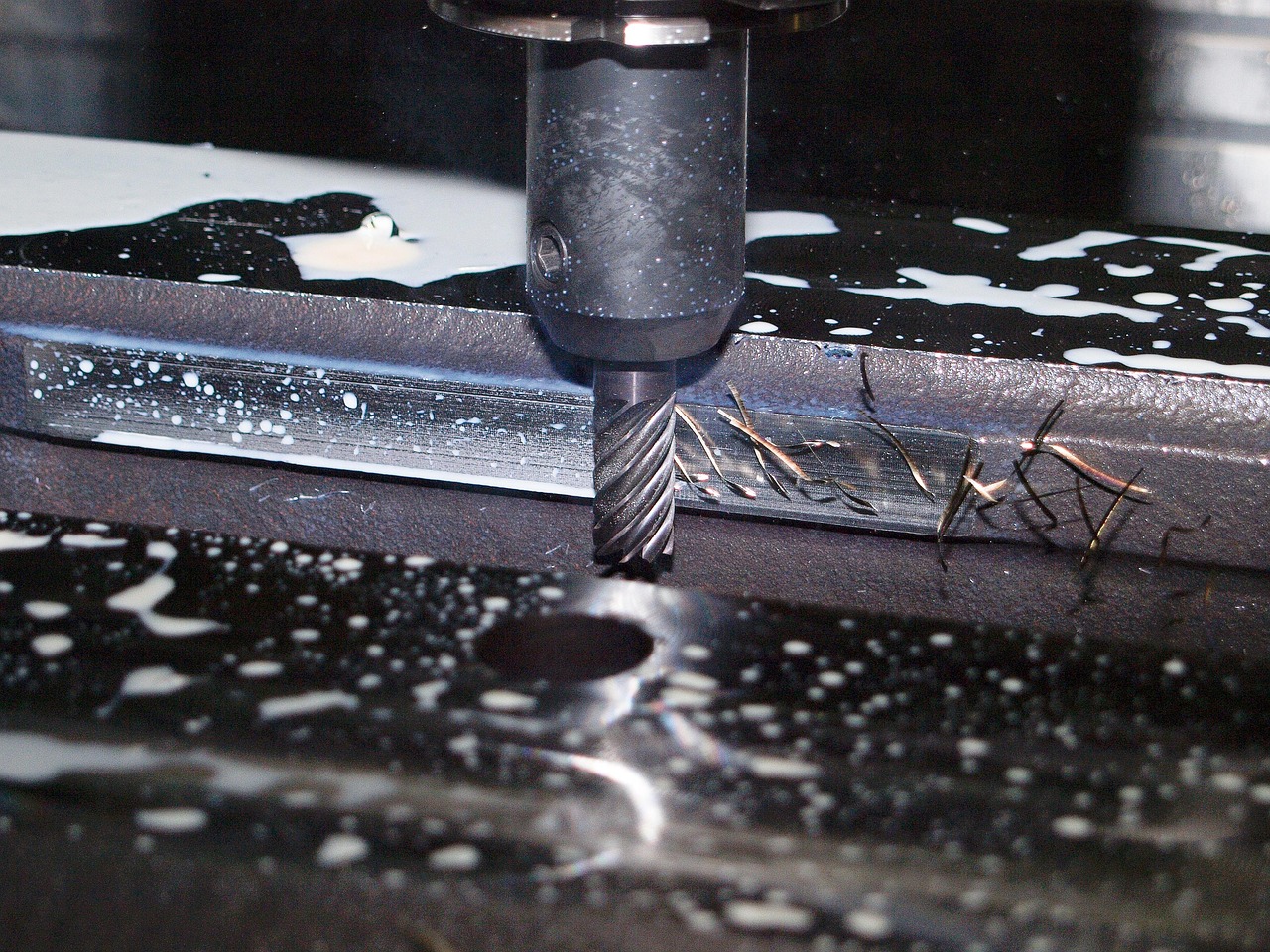
Japan is one of the world’s leading cutting-tool and carbide-tool manufacturing countries. It has a concentration of globally competitive manufacturers, including Mitsubishi Materials under the DIAEDGE brand, OSG, Sumitomo Electric Hardmetal, MOLDINO, formerly Mitsubishi Hitachi Tool Engineering, Tungaloy, Kyocera, Nachi-Fujikoshi, Dijet Industrial, Union Tool, Nakamura Choukou and Tokyo Diamond Tools Mfg.
At the same time, the industry is confronting three major structural changes.
- Geopolitical risk surrounding tungsten and competition for vertical integration: Manufacturers are seeking to reduce dependence on China and compete for access to recycling technologies.
- A qualitative change in machining demand caused by the EV transition: Demand related to engine and transmission components is expected to decline, while opportunities are shifting toward aluminum machining, motor cores and power-semiconductor manufacturing equipment.
- Aging ownership and succession challenges involving specialist grinding and coating expertise: Mid-market and smaller manufacturers in Kansai, Chubu and Hokuriku face both ownership succession and the risk of losing accumulated technical skills.
This article examines Japan’s Cutting Tools Sector and M&A, reviews representative recent M&A and capital-alliance transactions based on publicly disclosed information, and discusses the criteria that mid-market and privately owned manufacturers, including those in Kansai, should now consider.
All USD figures in this article are approximate and converted at USD/JPY = 150 for reference.
1. Industry Structure: A Two-Layer Market of Major Groups and Specialist Mid-Market Manufacturers
Japan’s cutting-tool and cemented-carbide-tool industry has a broadly two-layer structure. The first layer consists of major manufacturers with global production and sales networks. The second consists of specialist mid-market and smaller manufacturers with strengths in particular applications, materials and technical processes.
Major groups with revenue exceeding USD 667 million
- Mitsubishi Materials Corporation: One of Japan’s largest cutting-tool manufacturers through its DIAEDGE brand and machining business.
- OSG Corporation (TSE Prime: 6136; headquartered in Toyokawa, Aichi Prefecture): A world-leading producer of taps, drills, end mills and other hole-making tools. For the fiscal year ended November 2025, OSG reported revenue of USD 1.07 billion, up 3.3% year on year, EBITDA of USD 227 million, operating profit of USD 135 million, and capital expenditure of USD 127 million. The company is constructing a new Oike plant as a production base for carbide end mills, according to its fiscal 2025 financial results.
- Sumitomo Electric Hardmetal Corporation (located within Sumitomo Electric Industries’ Itami Works in Hyogo Prefecture): Established in April 2003 as a wholly owned subsidiary of Sumitomo Electric Industries. It manufactures cemented-carbide, CBN and diamond-sintered cutting tools and laser optical components under brands including IGETALLOY, SUMIBORON and SUMIDIA. It is one of Kansai’s leading tool manufacturers, as described in its company profile.
- Tungaloy Corporation: A member of Israel-based Iscar Metalworking Companies, or IMC, which is part of Berkshire Hathaway. Tungaloy joined IMC in 2008 and now operates in coordination with its global sales and production network, as outlined in this JETRO industry report.
- Kyocera’s cutting-tool business: Historically strong in indexable inserts. Through its 2016 acquisition of the US-based SGS group, Kyocera expanded into solid tools and has developed a broader cutting-tool portfolio.
- MOLDINO Tool Engineering, Ltd. (headquartered in Sumida-ku, Tokyo; formerly Mitsubishi Hitachi Tool Engineering): A highly regarded manufacturer of end mills for die and mold machining. Fiscal 2024 revenue was USD 134 million, with ordinary profit of USD 20 million. MOLDINO is a wholly owned subsidiary of Mitsubishi Materials, according to its company profile.
Specialist mid-market and smaller manufacturers with revenue ranging from tens of millions to several hundred million dollars
- Dijet Industrial Co., Ltd. (TSE Standard: 6138; headquartered in Hirano-ku, Osaka): A long-established Kansai manufacturer with integrated production of cemented carbide, wear-resistant tools and cutting tools.
- Nachi-Fujikoshi Corporation (TSE Prime: 6474; headquartered in Toyama): A diversified machinery manufacturer active in cutting tools under the NACHi brand, as well as bearings and hydraulic equipment.
- Union Tool Co. (TSE Prime: 6278; headquartered in Shinagawa, Tokyo): A global leader in carbide drills for printed circuit boards.
- Nakamura Choukou Co., Ltd. (TSE Standard: 6166; headquartered in Sakai, Osaka): A Kansai specialist in carbide tools and diamond wire.
- Tokyo Diamond Tools Mfg.: A specialist manufacturer of diamond tools.
- OSK, Okazaki Seiko, Tanoi Manufacturing and Yamawa Manufacturing: Representative examples of Japan’s numerous long-established specialist tool manufacturers.
Kansai contains an important concentration of the cutting-tool industry, including Nakamura Choukou, Dijet Industrial, Sumitomo Electric Hardmetal and the historical Osaka roots of MOLDINO through the former Teikoku Cutter Manufacturing.
2. Representative M&A Transactions: The Race for Tungsten and the Acquisition of Global Sales Networks
Two principal themes can be identified in recent cutting-tool M&A. The first is competition for tungsten resources, recycling capability and vertical integration. The second is the acquisition of technology and global sales networks.
2-1. Mitsubishi Materials × H.C. Starck Holding, Germany: Acquisition of a Century-Old Tungsten Specialist
On May 14, 2024, Mitsubishi Materials announced that it had reached a basic agreement to acquire all shares of H.C. Starck Holding (Germany) GmbH, a major German tungsten materials company owned by Vietnam-based Masan High-Tech Materials, as stated in Mitsubishi Materials’ May 14, 2024 press release.
The parties signed a share-transfer agreement on May 30, 2024, with closing targeted for the end of March 2025, according to Mitsubishi Materials’ May 30, 2024 IR announcement.
Strategic significance of the acquisition:
- H.C. Starck is a tungsten specialist with more than 100 years of operating history and one of the world’s largest tungsten-recycling capabilities.
- Mitsubishi Materials gained production operations across four major markets: Japan, including Ibaraki and Niigata; Germany; North America; and China.
- By combining H.C. Starck with Japan New Metals, its wholly owned producer of tungsten intermediate materials, Mitsubishi Materials could significantly strengthen vertical integration from raw-material procurement through tungsten-carbide powder, cemented carbide and finished carbide tools.
- The acquisition became an important component of Mitsubishi Materials’ Medium-Term Management Strategy 2030 and its objective of becoming a globally recognized leading company in tungsten products.
China accounts for around 80% of global tungsten production. Tungsten is therefore a strategic material, and restructuring its supply chain has become a global management priority in the context of US-China tensions and economic security. The acquisition of H.C. Starck’s recycling technology and North American operating base represented a direct response to this geopolitical risk.
2-2. Mitsubishi Materials × Mitsubishi Hitachi Tool Engineering: Full Ownership and Rebranding as MOLDINO in April 2020
On April 1, 2020, Mitsubishi Materials made Mitsubishi Hitachi Tool Engineering, formerly a carbide-tool subsidiary of Hitachi Metals, a wholly owned subsidiary and renamed it MOLDINO, as announced in Mitsubishi Materials’ April 1, 2020 release.
MOLDINO originated as Teikoku Cutter Manufacturing in Osaka in 1928 and represents one of the historical roots of Japan’s carbide-tool industry. It subsequently became Hitachi Carbide, Hitachi Tool Engineering and Mitsubishi Hitachi Tool Engineering before reaching its current corporate form.
The company is internationally recognized for end mills used in die and mold machining and operates production facilities in Narita, Yasu in Shiga Prefecture, and Uozu in Toyama Prefecture. Its products complement Mitsubishi Materials’ DIAEDGE portfolio, while MOLDINO continues to deepen its position in the die and mold market under its own specialist brand.
2-3. Kyocera × SGS Tool Company, United States: Full Entry into Solid Tools
In May 2016, Kyocera acquired 100% of SGS Tool Company, a precision solid-carbide-tool manufacturer founded in 1951 and based in Munroe Falls, Ohio. The transaction also included SGS Medical Division, SGS UK Division and Hardcoating Technologies, bringing the wider solid-tool group under Kyocera ownership and reorganizing it as KYOCERA SGS Precision Tools, or KSPT, as described in the company’s corporate history.
Kyocera had historically held a strong position in indexable inserts. The SGS acquisition added solid tools, including end mills, and strengthened Kyocera’s position as a comprehensive cutting-tool manufacturer serving automotive, aerospace, medical and energy applications. Kyocera began a full-scale rollout of SGS-branded products in Japan in April 2019, according to its March 1, 2019 machine-tool announcement.
In 2021, KYOCERA Precision Tools and KSPT were integrated into a new KSPT Group. The transaction therefore entered a deeper phase of global integration approximately five years after the original acquisition.
2-4. OSG × Amamco Tool & Supply, United States: Establishing an Aerospace Tooling Platform
In 2016, OSG acquired 100% of Amamco Tool & Supply Co., Inc., a South Carolina-based manufacturer of precision carbide cutting tools, through its US subsidiary OSG USA. Amamco had particular strength in precision carbide tools supplied to major aerospace manufacturers, and the acquisition expanded OSG’s sales base within the North American aerospace industry. It was positioned as one element of OSG’s strategy to accelerate its global expansion.
For the fiscal year ended November 2025, OSG recorded revenue of USD 1.07 billion, EBITDA of USD 227 million and capital expenditure of USD 127 million, while continuing construction of the new Oike plant for carbide end mills. Under its long-term objective of becoming the world’s leading company in hole-making cutting tools, OSG is pursuing global M&A and domestic manufacturing investment in parallel, as shown in its fiscal 2025 financial results.
2-5. Tungaloy × IMC, Israel: Becoming Part of Berkshire Hathaway’s Industrial Network
Tungaloy joined Israel-based Iscar Metalworking Companies, or IMC, in 2008 and became part of an industrial group ultimately controlled by Berkshire Hathaway. Its principal production base in Iwaki, Fukushima Prefecture now operates in coordination with IMC’s manufacturing and sales networks in India, China, Europe and other regions, as described in this JETRO report.
The integration of a leading Japanese carbide-tool manufacturer into a Berkshire Hathaway-controlled industrial group remains one of the clearest symbols of the internationalization of Japan’s cutting-tool sector.
3. Acquisitions and Succession Transactions Involving Mid-Market and Smaller Companies: What Is Actually Happening
Large-scale transactions among major groups tend to attract the most attention, but M&A and succession involving mid-market and smaller cutting-tool and carbide-tool manufacturers have also increased steadily in recent years, often triggered by the absence of successors or financial restructuring. The following are representative cases confirmed through publicly available information.
3-1. OSG Group’s Nissin Diamond × Micro Diamond: Business Succession in October 2024
Nissin Diamond, an OSG group company based in Takashima, Shiga Prefecture, succeeded to the business of Micro Diamond Co., Ltd., headquartered in Yokohama, on October 1, 2024, according to OSG’s August 26, 2024 announcement.
Micro Diamond was described as the only company in the world capable of producing ultra-small-diameter single-crystal ball end mills. OSG had also brought Netherlands-based Precision Tools Holding B.V. into the group in July 2024. Collaboration among these three businesses was intended to accelerate expansion into micro-precision diamond tooling for electronic-component molds and medical molds.
Following the business succession, Nissin Diamond changed its name to OSG Diamond Tool Co., Ltd. in December 2024, as noted in the company’s history and profile.
Implications for mid-market and privately owned manufacturers: This is a representative case in which a company possessing an extremely niche but irreplaceable technology in ultra-small-diameter single-crystal ball end mills became a core capability within the micro-precision-machining segment of a listed global group. The scarcity of the technology itself constituted the principal source of value to the buyer.
3-2. Harmonic Drive Systems × Hata Grinding: Business Transfer Following Civil Rehabilitation in October 2024
Harmonic Drive Systems, a major precision speed-reducer manufacturer listed on the TSE Prime Market, announced on October 8, 2024 that it had entered into a business-transfer agreement with Hata Grinding in Nagano Prefecture. The transfer was implemented on October 31, 2024, as described in the transaction summary and Harmonic Drive Systems’ official reports.
Hata Grinding had filed for civil rehabilitation proceedings in July 2024. It possessed many years of experience in high-precision grinding and had supplied precision speed-reducer components to Harmonic Drive Systems over a long period. Harmonic Drive Systems therefore acquired the business to preserve the stability of its supply chain.
Implications for mid-market and privately owned manufacturers: Had a capital relationship with a major customer or a succession process been considered before the civil rehabilitation filing, the business might have been transferred on terms providing greater certainty to management, employees and customers. The timing of a strategic decision before financial deterioration becomes visible can be decisive.
3-3. Mitsubishi Materials × U.F.P. s.r.l., Italy: Acquisition of a European Mid-Market Regrinding Specialist in April 2025
On April 3, 2025, MMC Hardmetal Europe Holdings, Mitsubishi Materials’ European holding company, acquired all shares of U.F.P. s.r.l., a major Italian cutting-tool regrinding company headquartered in Missaglia, Lombardy, according to Mitsubishi Materials’ April 3, 2025 press release and its corresponding English-language announcement.
Founded in 1987, U.F.P. operates two manufacturing locations in Italy and serves aerospace, medical, automotive and energy customers, handling more than 19,000 orders annually for over 1,000 customers. Expected fiscal 2024 revenue was EUR 12 million.
Mitsubishi Materials already operated a manufacturing facility in Valencia, Spain, but had relatively limited European regrinding capabilities. The acquisition of U.F.P. was intended to establish a full-service offering in Europe extending from original tool production through regrinding.
Implications for mid-market and privately owned manufacturers: Even a mid-market regrinding specialist with revenue below USD 13 million can become a relevant acquisition target for a global group where it combines speed, quality and access to an established regional customer base. The transaction provides a meaningful precedent for Japanese mid-market regrinding and coating businesses.
3-4. Cominix × Sawanaga Shoten: Consolidation in Cutting-Tool Distribution
Osaka-based Cominix, a TSE Standard-listed distributor of cutting tools, wear-resistant tools and optical products, acquired Sawanaga Shoten, a cutting-tool distributor headquartered in Fukuoka, as described in Cominix’s profile of Sawanaga Shoten and corporate history.
Sawanaga Shoten was a long-established regional tool distributor with particular strength in supplying the casting and forging sectors in Kyushu. The acquisition expanded Cominix’s nationwide sales network.
Implications for mid-market and privately owned manufacturers: Consolidation is progressing not only among manufacturers but also among cutting-tool distributors. For regional distributors facing succession challenges, joining a listed tool distributor or a larger trading platform can provide a practical route to preserving customer relationships and employment.
3-5. Nakamura Choukou’s Divestiture of Nippon Nozzle: Portfolio Restructuring Scheduled for March 2026
Nakamura Choukou, a Kansai-based mid-market manufacturer of carbide and diamond tools listed on the TSE Standard Market, decided to sell its Kobe-based subsidiary Nippon Nozzle Co., Ltd., which manufactures spinning nozzles for synthetic-fiber production, to Kobe-based Suito-sha, a manufacturer of hydraulic piping for construction machinery.
The consideration was USD 16.7 million, with the transfer scheduled for March 31, 2026. For the fiscal year ended March 2025, Nippon Nozzle recorded revenue of USD 11.2 million, operating profit of USD 1.0 million and net assets of USD 14.9 million. Nakamura Choukou stated that it intended to use the proceeds to invest in its materials-science business and strengthen the profitability of its specialty precision-equipment and diamond-wire businesses, as stated in Suito-sha’s February 26, 2026 announcement.
Implications for mid-market and privately owned manufacturers: The sale of non-core operations and concentration of investment on core businesses are continuing management issues even for listed mid-cap companies. Determining what is core and what is non-core is therefore essential not only when considering a sale, but also when using M&A to acquire or reorganize a business portfolio.
3-6. Other Recurring Transaction Patterns
The transactions above illustrate five recurring patterns affecting acquisitions and succession among mid-market and smaller companies.
- A niche technology leader becomes a core capability within a larger group: The Micro Diamond model.
- Financial deterioration or civil rehabilitation leads to a business transfer to a principal customer: The Hata Grinding model, although generally under more difficult transaction conditions.
- A specialist function such as regrinding or coating is acquired to expand a major manufacturer’s service portfolio: The U.F.P. model.
- A regional distributor joins a listed distributor or major trading platform: The Sawanaga Shoten model.
- A listed mid-cap company sells a non-core business to another industrial company or financial investor: The Nippon Nozzle model.
Beyond these disclosed cases, succession M&A involving cutting-tool manufacturers, regrinding companies, coating providers and tool distributors with annual revenue ranging from tens of millions to several hundred million yen is proceeding quietly across Japan. Public announcements involving listed companies represent only the visible portion of the market. A larger number of undisclosed mid-sized transactions are likely being completed through established relationships among local customers, suppliers and business owners.
4. The EV Transition and the Qualitative Change in Machining Demand
The transition from internal-combustion vehicles to electric vehicles represents one of the most significant structural changes affecting the cutting-tool industry.
Demand expected to decline:
- Machining of gasoline-engine components, including cylinder blocks, cylinder heads, crankshafts and camshafts
- Machining of multi-speed transmission components, as many electric vehicles use only one or two speeds
- Certain machining processes replaced by gigacasting and the transition from removing material to forming large integrated castings
Demand expected to increase:
- Aluminum machining, as the amount of aluminum used per EV is estimated to be around 40% higher than in a gasoline vehicle, while global demand has been projected to increase from 1.4 million tonnes in 2020 to 8.8 million tonnes in 2030
- Motor-core stamping dies and motor-housing machining
- Ultra-precision tools used in manufacturing equipment for SiC and GaN power semiconductors
- High-performance tools for five-axis machining centers and multitasking machines
- CBN and PCD tools used for mirror finishing and difficult-to-machine materials
This change means that mid-market and smaller manufacturers that have supplied cutting tools steadily to second- and third-tier gasoline-engine component suppliers may face a fundamental change in their customer base. By contrast, manufacturers possessing relevant technologies in aluminum machining, motor cores, power semiconductors, medical devices or aerospace may benefit from the same transition.
The central question for an owner-manager is how closely the company’s technical portfolio is aligned with the categories of machining likely to grow during the next decade.
5. Kansai’s Cutting-Tool and Carbide-Tool Cluster: Greater Depth Than Is Commonly Recognized
Chubu, including Aichi, Mie and Gifu, and Hokuriku, including Toyama and Ishikawa, are widely recognized as major cutting-tool regions. Kansai nevertheless has a substantial industrial base that should not be overlooked.
- Sumitomo Electric Hardmetal in Itami, Hyogo Prefecture: One of Kansai’s largest carbide-tool manufacturers, located within Sumitomo Electric Industries’ Itami Works and holding internationally recognized brands including IGETALLOY, SUMIBORON and SUMIDIA. It has a world-class position in CBN and diamond-sintered tooling.
- Dijet Industrial in Hirano-ku, Osaka: A long-established TSE Standard-listed company integrating cemented carbide, cutting tools and wear-resistant tools.
- Nakamura Choukou in Sakai, Osaka: A TSE Standard-listed specialist in carbide tools and diamond wire.
- MOLDINO, headquartered in Sumida-ku, Tokyo but originating from Osaka-based Teikoku Cutter Manufacturing: The company retains a principal production base in Yasu, Shiga Prefecture.
- Osaka, Higashiosaka and Yao: A broader ecosystem of tool distributors, regrinding companies, coating providers and specialist tool manufacturers supporting the region’s precision-metalworking base.
A number of privately held cutting-tool manufacturers, regrinding businesses, coating providers and tool distributors in Kansai face succession challenges while retaining hidden strengths in particular difficult-to-machine materials or customer segments such as aerospace, medical devices and semiconductor manufacturing equipment.
These businesses can be strategically attractive to nearby major manufacturers, including Sumitomo Electric Hardmetal, Dijet Industrial and Nakamura Choukou, as well as Chubu-based comprehensive tool manufacturers, private equity funds and trading-company-backed consolidation platforms.
6. Five Strategic Questions Facing Mid-Market and Privately Owned Manufacturers
Based on the industry structure, M&A trends, EV transition and Kansai manufacturing concentration described above, the principal issues facing mid-market and privately owned cutting-tool and carbide-tool manufacturers can be summarized in five areas.
(1) Preparing for tungsten procurement risk: The concentration of tungsten production in China creates geopolitical and supply-chain risk. Large groups are responding through vertical integration and recycling, as demonstrated by Mitsubishi Materials’ acquisition of H.C. Starck. For mid-market and smaller manufacturers, becoming formally integrated into the supply chain of a larger group may itself represent a practical solution for securing stable access to tungsten and related materials.
(2) Rebuilding the customer portfolio after the EV transition: Companies with high exposure to gasoline-engine applications face an unavoidable shift in their customer portfolios over the next five to ten years. An equity relationship with a partner already serving aluminum machining, motor cores, semiconductor manufacturing equipment, medical devices or aerospace may provide a considerably more efficient route to those markets than attempting to develop each customer base independently.
(3) Preserving specialist grinding and coating skills: Cutting-tool manufacturing ultimately depends heavily on the practical skill of grinding technicians and the know-how required to optimize coating conditions. If experienced technicians retire without transferring their knowledge, enterprise value can deteriorate rapidly. For companies led by owner-managers in their sixties and dependent on senior technical managers of a similar age, the next three to five years may represent the practical decision window for succession-oriented M&A.
(4) Gaining access to global sales networks: Joining a larger group with an established international sales network can immediately provide access to overseas customers that a standalone Japanese manufacturer may find difficult to reach. Relevant precedents include Tungaloy within IMC, Kyocera and SGS, OSG’s operations in the Americas, and Sumitomo Electric Hardmetal’s global platform. As Japan’s domestic market contracts, access to a parent company with international distribution channels can become a decisive factor in determining future growth.
(5) Considering financial sponsors: Several private equity teams have experience in buy-and-build strategies involving mid-market industrial machinery and component manufacturers. The principal choices for an owner may include independent family or internal succession, integration with a strategic corporate buyer, or participation in a PE-backed roll-up. The appropriate path depends on the owner’s intention regarding long-term enterprise-value creation and the balance of responsibilities toward family members, employees, customers and suppliers.
Syntax Partners: Cross-Border M&A and Strategic Partnerships in Japan’s Cutting-Tool and Carbide-Tool Sector
Japan’s cutting-tool and carbide-tool sector contains a substantial universe of privately held manufacturers, regrinding businesses, coating specialists and distributors whose capabilities are difficult to identify through English-language information or conventional financial databases. Their strategic value may be embedded in material technologies, grinding and coating expertise, customer qualifications, application data, skilled personnel and long-standing relationships with Japanese manufacturers.
Syntax Partners supports international cutting-tool manufacturers, materials groups, industrial companies and financial sponsors seeking acquisitions, divestitures, capital alliances and other strategic partnerships in Japan.
(1) Strategic market assessment grounded in a detailed understanding of Japan’s cutting-tool landscape: We analyze Japan’s tungsten and carbide value chains, cemented-carbide, CBN and PCD technologies, grinding and coating capabilities, the impact of the EV transition, and demand across automotive, aerospace, dies and molds, semiconductor manufacturing equipment and medical devices. Based on this analysis, we identify acquisition and partnership themes aligned with the client’s product portfolio, geographic priorities and technology strategy.
(2) Relationship-led access to relevant Japanese counterparties: We identify and approach Japanese cutting-tool manufacturers, carbide specialists, regrinding and coating businesses, distributors, listed industrial groups, private equity funds and trading-company-backed platforms. Relevant counterparties may include Mitsubishi Materials, OSG, Sumitomo Electric Hardmetal, Kyocera, Tungaloy, MOLDINO, Nachi-Fujikoshi, Dijet Industrial and Nakamura Choukou, together with privately held specialists that are not readily visible through public information. Our approach is targeted and confidential rather than based on broad-list outreach.
(3) End-to-end cross-border transaction execution: We support international clients from initial market mapping and confidential counterparty outreach through NDA execution, valuation, transaction structuring, management discussions, due diligence, negotiation of definitive agreements, closing and initial post-merger integration planning. Transactions in this sector require particular attention to tungsten procurement, customer qualifications, grinding and coating know-how, skilled-employee retention, technology transfer and the continuity of Japanese customer relationships. We help clients evaluate these factors and manage the linguistic, cultural and relationship aspects of transaction execution in Japan.
If your organization is considering an acquisition, divestiture, capital alliance, joint venture or other strategic partnership involving a Japanese cutting-tool manufacturer, carbide-tool company, regrinding business, coating provider or tool distributor, Syntax Partners would be pleased to discuss how we can assist. We welcome both early-stage market discussions and live transaction mandates relating to Japan’s Cutting Tools Sector and M&A.